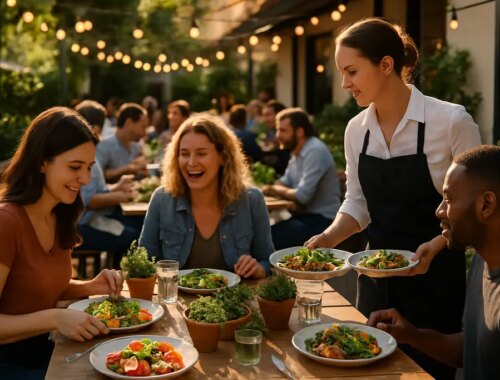

Seasonal Menus Highlight Local Fall Ingredients
Seasonal Menus tell diners a great deal before a reservation is made. In the Hudson Valley, fall dishes often become more interesting when a kitchen can explain why squash, apples, root vegetables, grains, or late-season greens belong on the plate. The appeal is not just rustic charm. National restaurant research shows that guests are paying attention to ingredient origin, and operators are responding with menu changes tied to local farms and producers.
For signature dishes, that shift matters. A dish built around local fall produce can show restraint, timing, and a clear sense of place. It can also help diners ask better questions: What came from nearby farms? Which ingredients are at their peak now? Is the kitchen changing the preparation as the harvest changes? Those questions are practical, especially in a region where diners often care about farms, markets, coffee programs, and the tone of a meal as much as the main course.
Why Seasonal Menus Are Leaning Local
Two national data points help explain why local fall ingredients keep showing up in restaurant planning. In the TouchBistro 2025 State of Restaurants Report, 42% of restaurant operators said they planned to add more locally sourced ingredients to menus within the next six months, making it the most cited menu change in that survey TouchBistro report. That figure does not prove every Hudson Valley restaurant changed its menu, but it does show that local sourcing was a major planning priority for operators in the report.
The diner side is just as useful. The National Restaurant Association’s 2025 report found that 64% of U.S. adults said locally sourced food was important when choosing a table-service restaurant. Among full-service guests who value local sourcing, 41% pointed to supporting community farms and food producers as the top reason, while 22% cited freshness and 17% cited higher quality restaurant industry report. Those numbers fit the way many Hudson Valley diners already talk about dinner: not only what tastes good, but who grew it and how the dish reflects the season.
Seasonal Menus And Signature Dishes
Seasonal Menus can give signature dishes a sharper identity. A fall pasta, tart, soup, or roasted entrée does not need a long ingredient list if the central ingredient is strong and well timed. Diners can look for dishes that name a farm, a nearby mill, a regional orchard, or a specific produce variety. If the menu only says “local vegetables,” that is not necessarily a problem, but it is fair to ask the server what is local that week.
That kind of question does not have to feel like an inspection. It can be part of the meal. A good answer might be simple: the apples came from a nearby orchard, the greens changed because the farmer’s supply changed, or the squash preparation shifts from roasted wedges to soup as the weather cools. Specific answers help diners understand whether a signature dish is built around the season or simply using seasonal language.
Local Sourcing As A Value Signal
Local sourcing can also shape how guests judge value. A dish may cost more when a restaurant buys from smaller producers, but price alone does not explain the full experience. Diners can weigh portion, skill, ingredient transparency, and how well the kitchen uses the product. A simple roasted squash dish can feel worth ordering if the seasoning, texture, and pairing show care. A vague fall special may feel less compelling if the menu gives no clue about origin or preparation.
For Hudson Valley readers comparing restaurants, the most useful move is to read menus before booking and note how clearly they discuss farms, orchards, grains, dairy, coffee, or preserves. Our related piece on local sourcing and fall dining looks at similar booking questions through a regional lens.
How Diners Can Read Fall Ingredient Cues
Fall menus often speak through patterns. Squash, pumpkins, apples, chestnuts, late greens, root vegetables, grains, and deeper spices can all point to cooler-weather cooking. The practical issue is not whether an ingredient sounds autumnal. The better question is whether the kitchen gives enough detail to show why the ingredient belongs in that dish.
For Hudson Valley diners, Seasonal Menus are easiest to evaluate when the menu language is specific. “Apple” is useful. “Local apple mostarda with pork” is more useful because it points to technique and pairing. “Squash soup” is clear enough, but “roasted squash soup with toasted grain and cider vinegar” gives a stronger sense of texture, acidity, and balance. Diners do not need chef training to spot these cues. They only need to ask what role the ingredient plays.
Questions To Ask Before Booking
Before making a reservation, call or check the restaurant’s official menu if the restaurant keeps it updated. If the menu changes often, ask whether fall specials are posted daily, weekly, or only at the table. For a celebratory meal, it is reasonable to ask whether a signature dish is available on the date you plan to dine. If the answer is uncertain, treat that as normal for a kitchen that buys seasonally, not as poor service.
- Ask which fall ingredients are local that week, not just which dishes are seasonal.
- Ask whether a signature dish changes with farm supply or stays fixed through the menu cycle.
- Ask about coffee pairings, dessert flavors, or after-dinner drinks if the meal is built around autumn ingredients.
- For private meals, ask how the chef handles substitutions if a farm item is unavailable.
Private dining raises another set of questions. If you are hiring a chef for a home dinner, ask how they source produce, whether they can name farms or markets, and how far in advance the menu is set. Readers comparing in-home dining options can also browse personal chef resources for a broader look at chef service planning and menu expectations.
Coffee, Dessert, And The Fall Menu
Fall dining is not only about entrées. Coffee service and dessert can either support the meal or flatten it. Apple desserts, squash cakes, spiced loaves, nut-based sweets, and custards can pair well with coffee if the roast and sweetness level are considered. Diners should ask whether coffee is treated as part of the meal or simply served as an afterthought. A thoughtful cafe or restaurant may not publish every detail online, but staff should be able to explain the coffee source, roast style, or dessert pairing in plain language.
This matters for signature dishes because the last course often shapes memory. A local apple dessert followed by poorly matched coffee can weaken an otherwise careful dinner. A modest dessert with a well-chosen cup can make the meal feel complete without excess.
Hudson Valley Fall Ingredient Choices

Hudson Valley diners do not need to chase every trend to eat well. The stronger approach is to use Seasonal Menus as a reading tool. Look for clear ingredient names, honest supply notes, and dishes that show why a local product is being used. A restaurant does not need to list every farm on the menu, but it should be able to answer basic questions about what is local, what is seasonal, and what may change.
The national research supports what many local diners already sense: local sourcing is not a fringe concern for table-service restaurants. It influences booking choices, menu planning, and the way guests judge a dish. This fall, the most satisfying signature dishes are likely to be the ones that make their ingredients understandable without overexplaining them. Ask direct questions, read for specific details, and leave room for the kitchen to adjust as the harvest shifts.