Sustainable Sourcing Lessons From Feld Chicago
Sustainable sourcing can sound simple on a menu, but Feld in Chicago shows how demanding the idea becomes when a restaurant builds dinner around what actually arrives from nearby producers. For Hudson Valley diners, the lesson is practical: a tasting menu that claims a close farm connection should also be able to explain how ingredients move from producer to plate, how often dishes change, and why a familiar item may taste different from one visit to the next.
Feld sits outside the Hudson Valley, yet its approach offers a useful comparison for our region’s brunch rooms, chef-led dinners, and farm-minded cafes. The restaurant has described its work as “relationship-to-table,” a phrase that shifts attention away from a vague local label and toward direct ties with producers. That distinction matters for diners who already ask sharper questions about menu language, value, and seasonality. It also connects with the way many Hudson Valley guests think about farm stands, farmers markets, and restaurant sourcing; for a local angle, our piece on local sourcing dining looks at similar questions from a regional dining point of view.
Why Sustainable Sourcing At Feld Feels Different
Feld’s model is built around a tight Midwestern supply area rather than a broad claim of good intentions. WBEZ reported in June 2026 that Feld routinely sourced around 95% of its ingredients from Illinois, Michigan, Wisconsin, and Indiana, all within a four-hour radius, and that this led to about 40% weekly menu changes depending on what arrived at the restaurant WBEZ reported. That is a useful number for diners because it shows how sourcing choices affect the actual meal, not just the menu copy.
Sustainable Sourcing As A Daily Menu Rule
The most diner-facing part of Feld’s method is that change is not treated as a problem. A high-change menu asks guests to accept less predictability, but it can also make the meal feel more connected to the producer calendar. That kind of sustainable sourcing is different from a restaurant listing a few farms while keeping every dish fixed for months. It asks the kitchen to react, and it asks diners to arrive with curiosity instead of a checklist.
For Hudson Valley diners, the practical takeaway is to read a seasonal menu with care. If a cafe or restaurant says a dish is built around local produce, ask whether the dish changes with the harvest or whether only a garnish changes. Neither answer is automatically better. A consistent brunch dish can be comforting and well made. A changing dish can show close producer contact. The point is clarity, especially when a restaurant prices a meal around the promise of proximity.
What “Relationship-To-Table” Signals
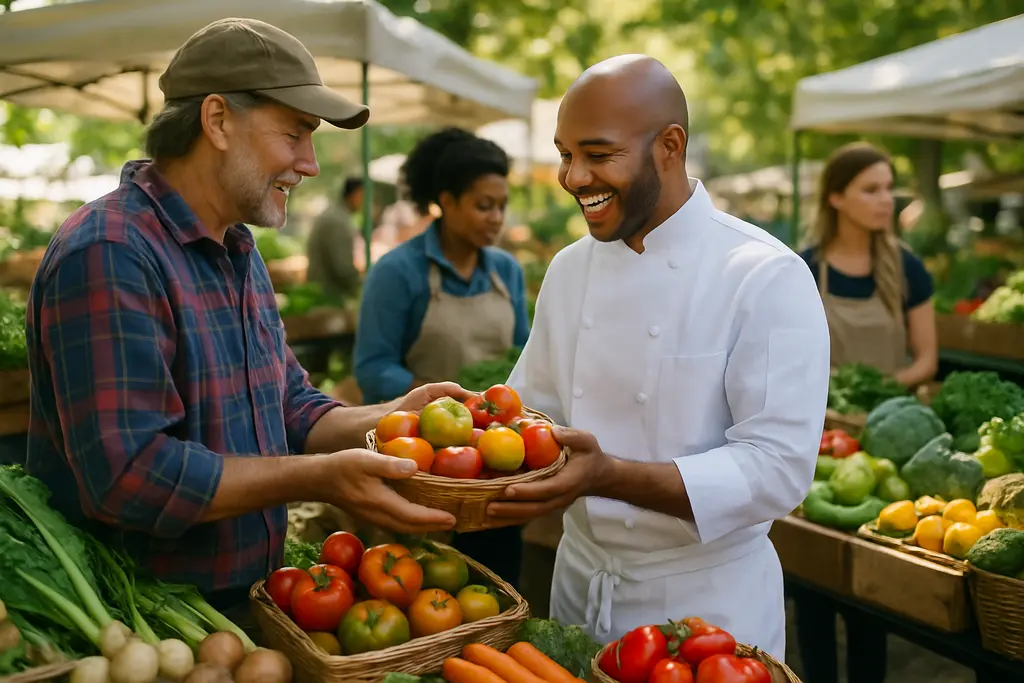
Resy reported in August 2026 that Feld emphasizes direct connections with dozens of small farmers, fishermen, ranchers, and dairy producers, and that the restaurant knows or visits about 90% to 95% of the farms or producers tied to its daily produce Resy reported. That level of connection gives diners a more specific standard for judging sourcing language. It is not only about distance. It is also about whether the chef can name the producer, explain the ingredient, and show why that supplier matters to the dish.
This is where Hudson Valley diners can bring the same lens to local reservations. A restaurant does not need to follow Feld’s exact model to be transparent. It can list producer names, train servers to explain seasonal swaps, or note that a dish changes based on farm delivery. Diners can appreciate those details without demanding that every restaurant operate like a high-end tasting counter.
What Feld Changes About Signature Dishes
Signature dishes often sound fixed: the plate a guest returns for, the course that appears in photos, the item that defines the chef. Feld complicates that idea. Its recurring dishes can return when the right product returns, but the dish may still shift based on the date, the producer, and the condition of the ingredient. That makes a signature feel less like a frozen recipe and more like a seasonal marker.
Recurring Dishes Without Fixed Recipes
One reported example is a foie gras preparation connected to Troy King at Au Bon Canard in Minnesota, served with grilled garden grapes and fig leaf oil when those ingredients were available for about one week. The detail matters because it shows how scarcity can shape a signature dish. The dish is not repeatable on demand if the supporting ingredients are tied to such a short window.
For diners, this changes the way expectations should be set before booking. If a restaurant is serious about seasonality, it may not be able to promise a specific dish weeks in advance. The better question is not, “Will this exact plate be served?” It is, “How does the restaurant handle recurring ideas when the ingredients change?” That question works for a Chicago tasting menu, a Hudson Valley supper club, or a chef’s counter built around local produce.
Reading Price Against Experience
As of May 2026, Feld’s tasting menu was reported at $225 per person and served more than 20 dishes, with the count described as roughly 25 to 30 courses in a fine dining format. That price point will not match most casual Hudson Valley meals, but it does raise a useful value question. A diner paying for a tasting menu is not only paying for ingredients. They are paying for producer relationships, daily menu planning, labor, service, and a kitchen’s ability to make last-minute changes feel intentional.
For a Hudson Valley guest deciding between a familiar dinner spot and a higher-priced seasonal menu, the same value test applies at a different scale. Does the restaurant explain the source of key ingredients? Are substitutions handled openly? Does the server know why a dish changed? A meal does not need 25 courses to show care. It does need enough transparency for guests to understand what they are supporting.
Booking Questions For Hudson Valley Diners

The most useful part of Feld’s example is not that every restaurant should copy it. Most dining rooms have different budgets, staffing levels, and guest expectations. The stronger lesson is that sustainable sourcing becomes more meaningful when a restaurant can connect sourcing choices to specific dining choices: menu changes, course size, ingredient naming, and repeat dishes that return only when the season allows.
- Ask how often the menu changes and whether changes are tied to producer deliveries.
- Ask which farms, fisheries, dairies, or ranches are central to the menu.
- Ask whether a signature dish is always available or only returns during a short seasonal window.
- Ask how the restaurant handles substitutions when a promised ingredient is unavailable.
- Ask whether the price reflects a set course count, a flexible tasting format, or market-driven changes.
These questions are not meant to put servers on the defensive. They help diners match their expectations to the restaurant’s format. A cozy cafe may offer one or two seasonal specials. A tasting menu may change many dishes in a week. A private chef dinner may depend on a shopping list set close to the event date. Each version can be satisfying if the communication is honest.
Regional diners who compare food towns beyond the Hudson Valley may also find useful contrasts through related dining coverage on De Novo Montclair, especially when thinking about how local identity shows up on a menu. The more guests compare notes across nearby regions, the easier it becomes to spot clear sourcing language and separate it from vague branding.
Feld Chicago Takeaways For Hudson Valley Diners
Feld’s Chicago model gives Hudson Valley diners a sharper way to read ambitious menus. A restaurant can talk about farms, but the stronger signal is whether those farms shape the meal in visible ways. If a menu changes because deliveries changed, if a dish returns only when a producer has the right ingredient, or if a server can explain why one cheese or fruit appears on a given night, the sourcing claim has more weight.
The same thinking applies to signature dishes. A repeat dish does not have to be identical to be recognizable. It can carry the same idea while letting the season guide the details. That may be a helpful mindset for Hudson Valley diners who love a dependable brunch favorite but also want to support restaurants that cook closer to the farm calendar.
Feld also shows that sustainable sourcing is not only a kitchen philosophy. It is a guest experience shaped by pricing, trust, menu wording, and the willingness to accept change. Before booking any producer-focused meal, ask what will be fixed, what may shift, and how the restaurant explains those choices. The answer will tell you more than a single local label ever could.