Local Sourcing Chicago: Feld’s Dining Lessons
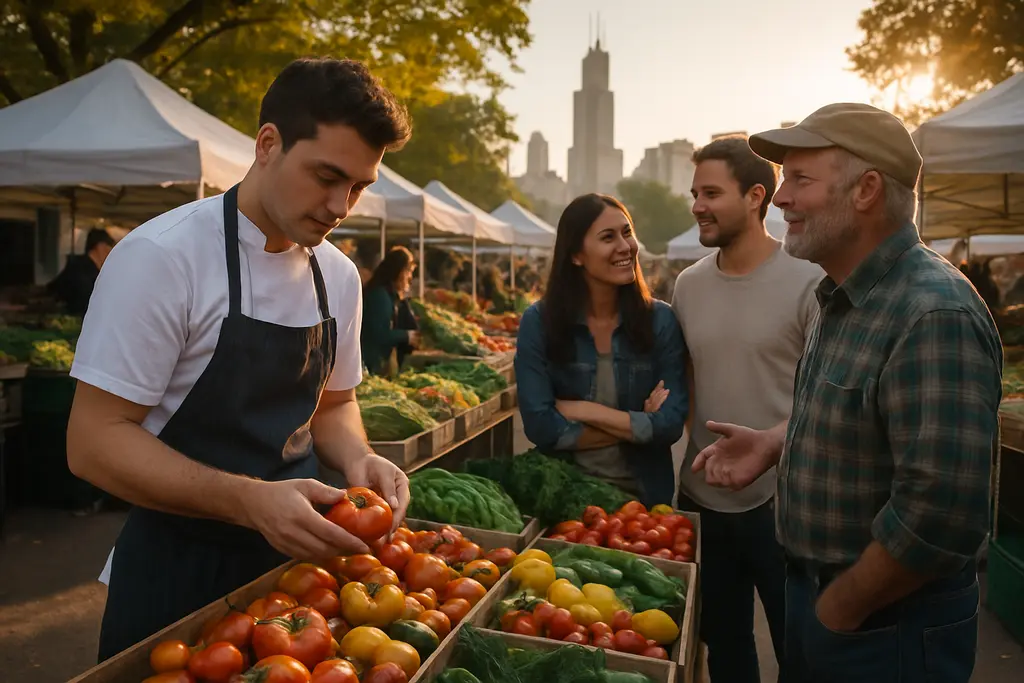
For Hudson Valley diners who care about where a plate begins, local sourcing Chicago offers a useful case study through Feld, a small West Town restaurant built around daily availability from farms, ranches, and fisheries. Feld opened on June 28, 2024, with a tasting menu described at launch as more than 30 courses, changing quickly based on what the restaurant could source that day Eater Chicago. That model feels far from a casual Hudson Valley dinner, yet the questions it raises are close to home: how much should diners expect a menu to change, what makes a dish worth repeating, and how can a restaurant explain its sourcing without turning dinner into a lecture?
Feld is not a Hudson Valley restaurant, so the point here is not to rank it against local kitchens in Beacon, Kingston, Hudson, New Paltz, or Rhinebeck. The point is to use a well-documented Chicago example to sharpen how we read farm-driven menus closer to the river. In a region where farms and restaurants often sit within a short drive of each other, diners can learn a lot from the discipline behind a place that changes its food according to what arrives.
What Local Sourcing Chicago Shows Diners
Local sourcing Chicago becomes practical at Feld because the restaurant’s format is small, fixed, and highly dependent on supply. As of mid-2026, Feld operated as a 20-seat restaurant, with one seating per night Wednesday through Friday and two seatings on Saturday. Resy reported the prix-fixe menu at $225 per person, with 25 to 30 courses depending on the evening Resy. Those details matter because a tasting menu at that scale asks diners to give up some control. You are not ordering a favorite entree. You are trusting the kitchen’s read on the market.
That kind of meal can be thrilling, but it is not for every night or every diner. In the Hudson Valley, the same lesson applies to smaller tasting counters, chef’s menus, and special dinners built around local produce. Before booking, ask what is fixed and what may change. If the menu is described as market-led, expect some dish names, garnishes, or proteins to shift. A restaurant does not need 30 courses to work this way; even a three-course dinner can change when peaches run short, greens bolt, or a fisherman’s delivery looks better than planned.
Local Sourcing Chicago And The Daily Menu
One striking point from Feld’s model is its direct sourcing. Resy reported that Feld sources about 90 to 95 percent of its ingredients directly from farmers or producers it knows well, with almost no middlemen, for its produce each day. In dining-room terms, that means the kitchen is working with the limits of real supply rather than only with a standing order from a broad distributor.
For Hudson Valley diners, this is a reminder to read menu language closely. “Local” can mean a nearby farm, a regional distributor, a seasonal special, or a long-running relationship. None of those meanings is automatically bad, but they are different. If sourcing is part of why you are booking, ask direct questions in a friendly way: Which farms are on the menu right now? Does the restaurant list producers because it buys from them often, or because a single dish uses one ingredient from that farm? Can the kitchen adjust the menu if a highlighted ingredient is not available?
Those questions are especially useful when comparing restaurants across the region. Our earlier piece on sustainable sourcing lessons from Feld looks at similar buying habits through a Hudson Valley lens. Diners who travel between New York, New Jersey, and Chicago can also compare how neighboring markets frame hospitality; a related site with more insights on dining culture, De Novo Montclair, offers another reference point for restaurant culture beyond the Hudson Valley.
Signature Dishes Under Seasonal Pressure
Signature dishes usually sound permanent. At a farm-driven restaurant, they may be recurring instead. Feld’s annual foie gras dish is a clear example from the research: it uses foie gras from Au Bon Canard in Minnesota, associated with Troy King, and is served with grilled backyard grapes and fig leaf oil. The grapes are ready for about one week each year, so the dish appears only during that short window.
That is a different definition of a signature dish. It is not “always available.” It is recognizable because of a repeated idea, a specific producer relationship, and a seasonal cue. Hudson Valley restaurants can work the same way with asparagus, strawberries, corn, tomatoes, apples, duck, cider, mushrooms, or cheeses, though each kitchen will set its own rhythm. A dish may return because a farm’s harvest returns, not because a printed menu promises it every week.
How A Signature Dish Can Still Change
Feld’s recent cited dishes show how a restaurant can build identity through movement rather than sameness. Examples from Resy included poached black cod with fried banana pepper and burnt honey gastrique, a yeasted pancake topped with dry-aged beef tartare and fried corn hair, Maine scallops, and halibut in late May 2026. Those dishes are specific enough to be memorable, yet they also suggest a kitchen responding to what it can obtain and what it wants to express on a given evening.
For diners, the practical move is to separate “I want that exact dish” from “I want that style of cooking.” If you book because of one photograph, you may be disappointed if the item has passed. If you book because the kitchen seems skilled at turning limited ingredients into a clear sequence, you are more likely to enjoy the meal on its own terms. This is true in Chicago, and it is just as true in the Hudson Valley during peak farm months.
Questions To Ask Before Booking
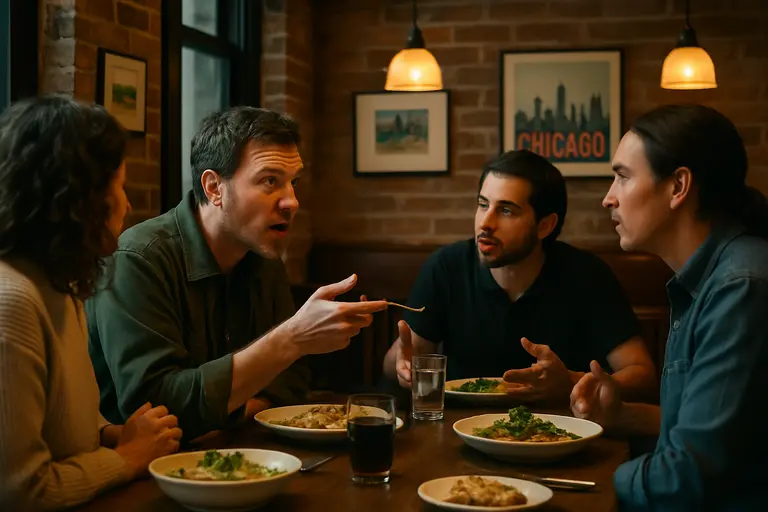
A source-led restaurant should not require diners to become procurement experts. Still, a few good questions can help you decide whether a tasting menu, chef’s counter, or farm dinner fits your expectations and budget. This is especially useful for larger parties, special occasions, and diners with strong preferences.
- Ask how much the menu usually changes from week to week, especially if you are booking after seeing a dish online.
- Ask whether the restaurant can share producer names for the current menu, not just past menus.
- Ask how long the meal usually lasts, since a 25- to 30-course format requires more time than a standard dinner.
- Ask what is included in the listed price and what costs extra, such as beverages or pairings.
- Ask how the kitchen handles preferences before you reserve, rather than waiting until you sit down.
These questions do not challenge the restaurant; they help both sides. A serious kitchen would rather seat diners who understand the format. Diners would rather avoid surprises about cost, timing, or menu flexibility. The result is a better meal, not a more formal one.
Local Sourcing Chicago Lessons For Hudson Valley Diners
The main lesson from local sourcing Chicago at Feld is that sourcing is not only a marketing phrase. In a small tasting-menu setting, it affects the number of courses, the pacing of the meal, the presence or absence of a signature dish, and the way diners should plan. A restaurant that buys close to the source may offer freshness and personality, but it may also ask you to accept change.
Hudson Valley diners are well positioned to understand that tradeoff. Our region already values farm stands, orchards, dairies, cider makers, bakeries, and seasonal cooking. The next step is asking sharper questions before booking and being open to menus that reflect a real day’s supply. Feld’s Chicago model shows one highly structured version of that idea. Closer to home, the same thinking can help you choose a dinner that respects both the producer and the plate.