Eat Local Month Links Diners and Local Farms
Washington State’s Eat Local Month began on September 1, 2026, with a clear message for diners: local sourcing is not just a chef’s talking point. It is a practical way to understand who grew, raised, caught, or made what appears on the plate. For brunch lovers, that can mean asking better questions before booking, reading menus with sharper eyes, and noticing whether a cafe connects its eggs, fruit, dairy, grains, seafood, or preserves to a real producer.
Here in the Hudson Valley, we already recognize the pleasure of a morning menu that feels connected to nearby farms. Washington’s September observance offers a useful case study for any food community trying to bring diners and producers closer together. The lesson is not that every restaurant has to look the same. It is that public campaigns, purchasing programs, and clear menu language can help guests understand local food before they order. For readers comparing regional approaches, our companion Washington dining planner looks at similar diner-first questions.
How Eat Local Month Connects Tables And Farms
A Statewide Signal For Local Producers
Washington State officially declared September 2026 as a month supporting farmers, fishermen, ranchers, and food artisans, according to Eat Local First. The nonprofit Eat Local First leads the “Get a Taste of Washington State” campaign as the fourth annual statewide observance, which began on September 1, 2026. That date matters for diners because it gives the month a clear calendar frame rather than a loose seasonal slogan.
For restaurants and cafes, Eat Local Month gives local sourcing a public moment. A brunch spot can use the campaign to explain why certain ingredients appear on a menu in September, or why a dish changes as produce, dairy, seafood, or meat availability shifts. For diners, the benefit is practical: a menu that names farms and food businesses invites questions. A menu that only says “local” without detail may still be sincere, but guests have less information to work with.
What The LFPA Numbers Show
The state’s Local Food Purchase Assistance program also shows how organized buying can connect producers with communities. As of February 28, 2026, Washington’s LFPA program had engaged 388 unique regional or local farms, created 418 new purchasing relationships between farms and hunger relief organizations, distributed food through 599 unique hunger relief sites across all 39 counties, and spent more than $10.9 million on local food, according to the Washington State Department of Agriculture. The same program reported that 57 percent of participating farms identified as underrepresented producers. In spending by product category, fresh produce accounted for 50.0 percent, while animal protein and seafood accounted for 37.6 percent.
Those are not brunch menu statistics, and they should not be treated as restaurant data. Still, they help diners see the larger food network behind a breakfast plate. Produce, seafood, meat, and dairy all require buying relationships before they reach a kitchen. A restaurant’s sourcing claim is easier to understand when diners remember that local food depends on logistics, distribution, and repeated purchasing, not only chef preference.
Brunch Clues Diners Can Use
Eat Local Month Brunch Questions
During Eat Local Month, a diner can use a few polite questions to understand how a brunch spot sources without turning breakfast into an interrogation. The goal is not to catch anyone out. It is to learn what the kitchen can verify. If a server does not know the answer, that is also useful information; the restaurant may need a manager, chef, or posted sourcing note to explain more clearly.
- Which farms or producers are supplying featured September ingredients?
- Are the eggs, dairy, meat, seafood, or produce from Washington State, or from a wider regional supply chain?
- Does the menu change during September based on what producers have available?
- If a dish is labeled local, which part of the dish is local?
- Should guests confirm local specials before making a reservation?
These questions work just as well in the Hudson Valley, especially for brunch. A frittata, biscuit sandwich, grain bowl, pastry case, or smoked fish plate can include both local and nonlocal ingredients. Diners do not need every item to be nearby to appreciate transparency. What matters is whether the restaurant gives enough detail for guests to make an informed choice.
Reading A Local Menu Without Guessing
The most helpful menus name the producer, the ingredient, and sometimes the place. A line that names a farm’s tomatoes or a creamery’s cheese tells you more than a broad phrase like “farm fresh.” If a cafe rotates specials often, social media or a posted chalkboard may carry the freshest sourcing notes, but diners should still confirm day-of details directly with the restaurant. The research available here does not verify hours, reservation policies, prices, or full brunch menus for individual Washington restaurants, so those details should be checked through official restaurant channels before making plans.
Community food campaigns can also help diners set realistic expectations. Local sourcing may show up as one featured special, a bakery partnership, a seafood dish, a farm salad, or a seasonal jam rather than a fully local menu. That is not a failure. Restaurants work with budgets, delivery schedules, staffing, and ingredient supply. A clear claim is better than a broad promise.
What Hudson Valley Diners Can Borrow
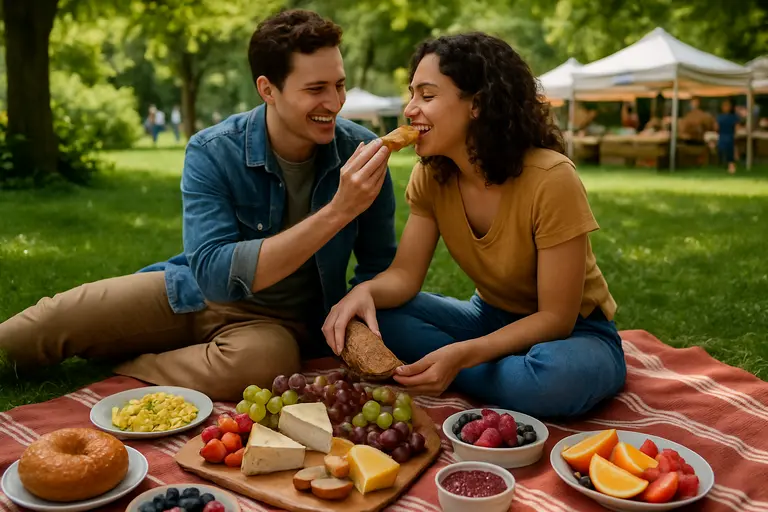
Ask Specific Sourcing Questions
Hudson Valley brunch fans can take a useful cue from Washington’s September campaign: ask about the ingredient you care about most. If you are ordering a vegetable omelet, ask about the vegetables. If you are ordering yogurt, cheese, or a latte, ask about dairy. If you are ordering smoked fish or a seafood special, ask where it was caught or sourced. Keeping the question specific gives staff a fair chance to answer accurately.
This approach also respects the work of producers. A farmer or food artisan benefits more from being named clearly than from being folded into vague local language. Diners benefit because they can start recognizing names that appear across markets, cafes, and restaurants. Over time, that builds a more informed brunch community, whether the table is in Washington State, Beacon, Kingston, Hudson, or Montclair. For readers who follow dining coverage across our wider network, a visit to De Novo Montclair provides an additional perspective on restaurant culture beyond the Hudson Valley.
Use Producer Names As A Clue
A named producer does not automatically prove quality, value, or a better dining experience. It does, however, give diners something real to evaluate. You can look for repeated producer names across menus, farmers markets, and food hubs. You can ask whether a special is available because of a one-time delivery or a standing relationship. You can also notice whether a restaurant updates its sourcing language as the month progresses.
For brunch writers and regular diners alike, that habit creates stronger local food literacy. Instead of ranking restaurants only by atmosphere, wait time, or portion size, we can also ask how clearly they credit the people behind the food. That is especially useful for morning meals, where simple ingredients carry a dish: eggs, greens, mushrooms, grains, milk, fruit, bread, butter, and coffee.
Eat Local Month And The Brunch Table
Practical Takeaways For September 2026
Eat Local Month gives Washington diners a timely reason to pay attention, but the habits it encourages last beyond September. Look for producer names. Confirm specials before booking. Ask which part of a dish is locally sourced. Accept that not every ingredient can or will be local. Reward clear communication, not vague claims.
For Hudson Valley readers, the Washington example is a reminder that local dining culture grows through many small choices: a restaurant naming its farms, a diner asking a fair question, a producer gaining a steady buyer, and a community recognizing that brunch can be both comforting and connected. September 2026 offered Washington State a public way to link diners with producers. The same practical spirit belongs at any table where people care about where breakfast begins.