Restaurant Design Trends Shaping Dining Rooms
The latest restaurant design trends are not just about pretty rooms. They shape how long guests want to linger, whether a table feels private enough for a birthday dinner, and how easy it is to relax over brunch with friends. For Hudson Valley diners, national design research offers a practical way to read a room before booking: look at seating style, sound, lighting, and whether the dining room supports the meal you want to have.
A restaurant can serve a well-made plate and still feel wrong for the occasion if the room works against the guest. Counter seats may be perfect for a solo lunch or chef-facing experience. A quieter corner may matter more for a family gathering. A dining room with separate zones may help one restaurant serve date nights, quick drinks, and group meals without forcing every guest into the same mood.
How Design Shapes The Meal Before A Bite
Design starts working before the first order is placed. Guests notice the entry, the host stand, the noise level, the seat spacing, and the light on the table. None of those details guarantees good food, but each one affects how the food is received. OpenTable’s 2026 Restaurant Dining Trends Report found that 54% of respondents were willing to pay a premium for a one-of-a-kind dining experience in 2026, and the report connects that interest with visual appeal, memorable design moments, and social-media-friendly spaces OpenTable trend report.
Restaurant Design Trends At The Table
At the table, the room becomes practical. Is the chair comfortable enough for a two-hour meal? Can guests hear each other without leaning forward? Does the lighting help people read the menu without making the room feel harsh? These questions may sound small, but they often decide whether a meal feels leisurely or rushed.
For Hudson Valley diners planning brunch, dinner, or a cafe meet-up, the lesson is simple: match the room to the reason for going out. A photogenic room can be fun for a celebratory meal, especially if the group likes taking pictures. A softer, calmer dining area may fit better for a conversation-heavy dinner. If you care about atmosphere as much as menu style, our notes on Hudson Valley dining atmosphere can help frame what to look for before reserving.
Restaurant Design Trends Diners Can Read Before Booking
The current restaurant design trends point toward rooms that do more than seat guests. They create choices inside the same address. A single dining room may include counter seats, bar seating, banquettes, small two-tops, semi-private corners, and tables for groups. That variety matters because not every guest wants the same level of energy.
Zoned Rooms, Counters, And Bar Seats
A May 2026 Restaurant Development + Design reader survey found that 33% of readers picked zoned restaurants as the top dining-room design trend. The same survey reported that 27% selected smaller spaces with more efficient layouts, while 25% chose open kitchens or views into the back of house as a leading trend rd+d reader survey. These numbers help explain why diners may see more rooms split into distinct areas rather than one uniform floor plan.
OpenTable also reported that counter seating rose 26% year over year in 2025, while bar seating rose 23%. That does not mean every diner wants to sit at a counter. It does mean that social seating is gaining attention as a design choice. For a solo diner, the counter can make a meal feel less isolated. For a couple, bar seats can create a casual start to an evening. For a group, a standard table may still be the better choice.
Before booking, check whether the reservation page lets you choose a seating type. If it does not, call or message the restaurant directly. Ask whether the available table is in the main dining room, at the bar, near an open kitchen, or in a quieter section. That one question can prevent a mismatch between the occasion and the seat.
What Social Seating Means For Groups And Solo Diners
Social seating is one of the more useful restaurant design trends for diners who pay attention to mood. A counter can feel lively because guests may see plating, drinks being made, or servers moving through the room. Bar seating can feel casual and flexible. Communal tables may suit a busy lunch, though they may not be ideal for private conversation.
How To Choose The Right Seat
The right seat depends on the meal. A diner catching up with an old friend may want a table away from the service path. Someone grabbing a quick solo dinner may prefer a counter where ordering feels easy. A family with children may want enough room around the table, not a tight corner near a busy entry. These choices are not about being fussy; they are part of planning a better meal.
- For conversation, ask for a table away from speakers, doors, and the main bar area.
- For a lively mood, consider bar or counter seating if the restaurant offers it.
- For a longer meal, ask whether the table is standard height, counter height, or booth seating.
- For photos, look for natural light during brunch or earlier dinner times.
Open kitchens remain part of the design conversation, but the rd+d survey shows they are only one part of a broader shift. Diners may enjoy seeing the kitchen, yet heat, sound, and movement can change the feeling of nearby tables. If you are booking a quiet anniversary dinner, a table facing the kitchen may not fit the night. If you love watching a kitchen work, it could be the most interesting seat in the room.
Practical Questions For Hudson Valley Reservations
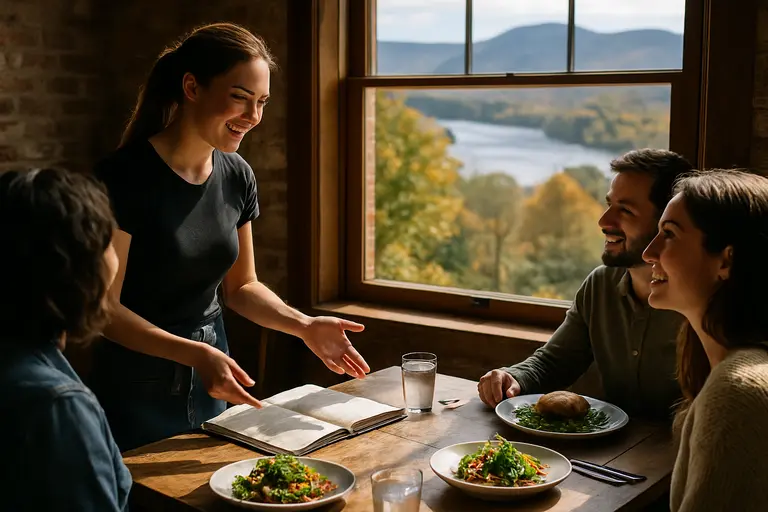
For Hudson Valley restaurants and cafes, the most helpful design features are often the ones guests can feel right away: clean sightlines, comfortable seating, balanced sound, and a room that matches the menu style. The national data does not prove that every local dining room is changing in the same way, but it does give diners a sharper eye.
What To Ask About Comfort
If you are sensitive to noise, ask whether the restaurant has quieter tables. If temperature matters, ask whether outdoor, patio, or enclosed seating is fully heated or cooled before you reserve. If you are booking for older relatives, ask about steps, booth height, and spacing. These are practical hospitality questions, not special treatment.
Lighting is another detail worth checking. A moody dining room can feel cozy at dinner, but it may be hard for some guests to read menus. Bright brunch light can make pastries and coffee feel cheerful, but glare near windows can be uncomfortable. Reading restaurant design trends through this lens helps diners think about comfort first, not just style.
For readers who compare dining rooms across the region and nearby communities, check out De Novo Montclair for a related perspective on how restaurants present food, service, and room design together.
Restaurant Design Trends For Better Hudson Valley Meals
Restaurant design trends are useful only if they help diners make better choices. A room with local character may be appealing, and OpenTable reported that 48% of consumers named local charm as the most appealing interior style for 2026. Still, charm should work with comfort. A memorable room should also support good service, clear conversation, and a meal that feels suited to the occasion.
The best diner strategy is to treat ambience as part of the reservation process. Look at official photos, read the seating options, and ask one or two direct questions before booking. Is the bar the only space available? Is the patio covered? Is the chef’s counter loud or relaxed? Is there a quieter zone for a group dinner?
Hudson Valley dining has always rewarded curious eaters who pay attention to place as much as plate. With restaurant design trends moving toward zoned rooms, social seating, photogenic details, and efficient layouts, diners have more reason to think carefully before choosing a table. The payoff is simple: a meal that feels right from the moment you sit down.