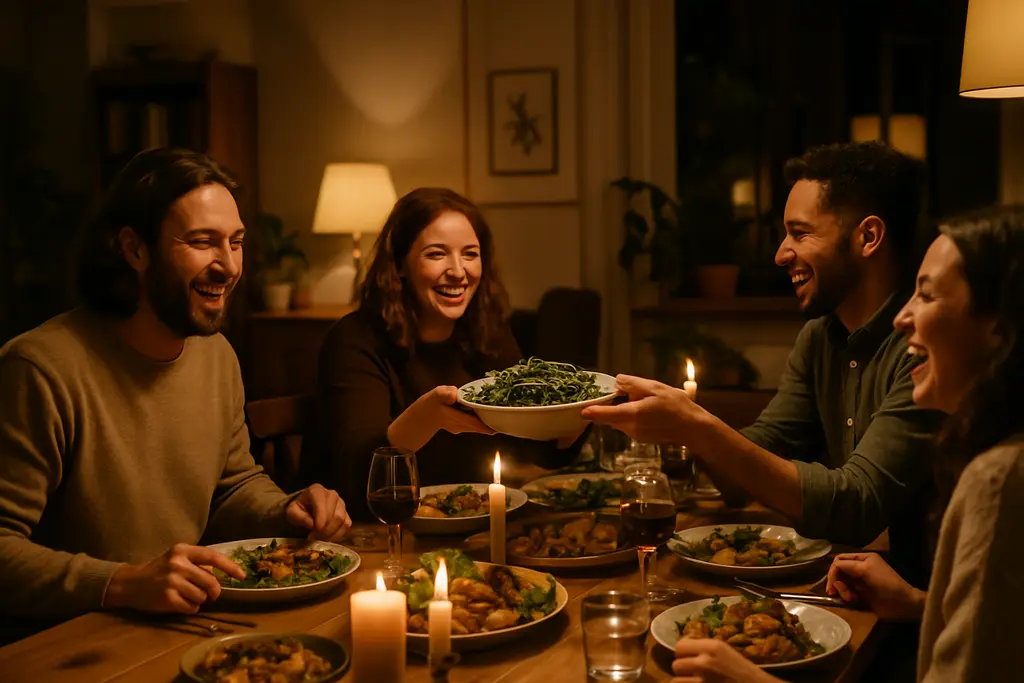
Group Dining Returns: Larger Tables, Warmer Rooms
Across the Hudson Valley, group dining has become more than a bigger reservation. It changes how a room sounds, how tables are set, how servers pace a meal, and how diners decide whether a restaurant feels right for a birthday, reunion, office dinner, or long-overdue catch-up. The shift is showing up in national data, too: OpenTable reported that large party reservations for six or more rose 11% year over year in 2025 compared with 2024, while 36% of Americans said they wanted more group and private dining options in 2026, according to its 2026 dining trends report.
For local diners, the practical question is simple: will the restaurant feel comfortable once six, eight, or twelve people sit down together? A table that works beautifully for two can feel cramped for a larger party. A lively bar room can become hard to hear across a long table. A patio can feel festive, but only if the seating, heat, cover, and service path can handle the size of the reservation. Restaurants are responding by rethinking furniture, deposits, private spaces, and guest flow.
Why Group Dining Is Back At The Center
Group Dining As A Connection Point
OpenTable also found that 78% of Americans agreed that dining out is a way to feel connected to others. That matters in a region where meals often serve as the anchor for a full day: coffee in Beacon, a walk through Kingston, a farm-market stop, then dinner with friends or family. The meal is not only about entrées. It is about whether everyone can sit together, hear each other, pass plates comfortably, and linger without feeling in the way.
Restaurants have good reasons to take larger parties seriously. A well-run table of six or more can bring energy to a room and help fill earlier or later reservation slots. At the same time, these parties require more coordination than smaller tables. The kitchen may need to time multiple courses at once. The host stand needs a realistic arrival window. The dining room needs enough space between chairs so servers can move without squeezing past guests. Those details shape ambience just as much as lighting or music.
Why The Room Matters Before The Menu
For diners, atmosphere becomes easier to judge if you think beyond décor. Ask whether the room has long communal tables, movable square tables, semi-private alcoves, or a separate dining area. Flexible tables can be joined for larger parties, then separated later for couples or smaller groups. Fixed booths and tight wall seating can look cozy, but they may limit what a restaurant can do for a party of eight.
Sound also deserves attention. Larger tables naturally create more cross-talk, so rooms with soft furnishings, fabric-backed seating, rugs under table clusters, or sound-dampening panels may feel more comfortable for celebrations. If the restaurant is known for a high-energy bar area, that may be perfect for a casual gathering but less ideal for a multigenerational dinner where hearing across the table matters.
How Dining Rooms Are Being Reworked
Flexible Seating And Semi-Private Areas
Restaurants are adapting by using layouts that can shift during the week. Movable tables, convertible spaces, and private or semi-private rooms allow operators to serve a standard dinner crowd one night and a larger celebration the next. The research supplied for this story points to more modular furniture and convertible layouts, with restaurants using underused corners or rooms for private gatherings when demand supports it.
That does not mean every Hudson Valley restaurant has remodeled for larger parties. The available research does not verify specific local renovation projects tied only to this trend, so diners should avoid assuming that every favorite spot can manage a bigger table with ease. Instead, treat the booking call or reservation notes as part of the dining experience. A quick question about seating style can prevent a cramped night.
Patios, Terraces, And Weather Planning
Outdoor areas are also being treated as higher-value spaces for larger gatherings when weather protection is in place. Covered patios, windbreaks, heaters, and more durable outdoor seating can make a terrace feel less like overflow and more like a planned dining room. In the Hudson Valley, where spring and fall evenings can shift quickly, it is worth asking whether an outdoor booking has a backup plan if the weather turns.
For more local reading on how sound, lighting, and comfort shape the meal before anyone orders, our piece on dining atmosphere trends is a useful companion. If you are interested in regional dining conversations, De Novo Montclair offers insights as part of the same network.
What To Ask Before Booking A Larger Table

Deposits, Holds, And Cancellation Terms
As larger reservations return, more restaurants are asking for credit card holds or deposits. SevenRooms reported that credit card holds or deposits have become standard in many cases, while only 22% of U.S. venues on its platform charged cancellation fees, with an average cancellation fee of about $52, according to its 2025 restaurant trends report. For diners, the practical step is to read the terms before confirming, especially if guests are traveling from different parts of the region.
A deposit is not automatically a warning sign. It can help a restaurant plan staffing, table placement, and food prep for a larger party. The key is clarity. Ask how the deposit is applied, when the headcount must be final, whether a partial no-show changes the bill, and how much notice is needed to cancel without a fee.
Questions That Keep The Night Comfortable
Before booking, diners can save stress by asking direct, friendly questions. The goal is not to pressure the host. It is to help the restaurant place the party where the meal will work best.
- Can the restaurant seat the whole party at one table, or will it be split?
- Is the table in the main room, a semi-private space, a patio, or a bar area?
- Is there a set menu, limited menu, or minimum spend for larger parties?
- What is the deposit, cancellation, or credit card hold policy?
- Can the room handle strollers, mobility needs, or guests who prefer quieter seating?
- Is there a recommended arrival time so the kitchen can pace the meal well?
Those questions matter most for birthdays, rehearsal dinners, family gatherings, and business meals. They also help with casual plans. A party of seven meeting after a hike has different needs than a formal anniversary dinner, but both benefit from a clear table plan and a realistic sense of the room.
Group Dining In The Hudson Valley
Reading The Room Like A Local
The Hudson Valley has a wide mix of dining rooms: small cafés, taverns, riverside restaurants, farm-adjacent dining rooms, and chef-driven spots with limited seating. That variety is part of the pleasure, but it also means larger parties should plan with care. A cozy room may be wonderful for four and difficult for ten. A louder room may fit a celebratory table but feel tiring for guests who want longer conversation.
My practical rule is to match the occasion to the room before falling in love with the menu. For a reunion, ask for round or wider table arrangements if available, since long tables can leave guests at the ends feeling separate. For a work dinner, ask about noise and whether the table is near a speaker or service station. For a family meal, ask about pacing and whether the restaurant prefers a set menu for larger parties.
The return of larger tables is good news for diners who use restaurants as gathering places, not just meal stops. It asks a little more from everyone: restaurants need flexible rooms and clear policies, while guests need accurate headcounts and respectful timing. When both sides communicate early, a bigger table can feel relaxed, warm, and memorable without overwhelming the room around it.