Private Chefs Bring Signature Dining Home
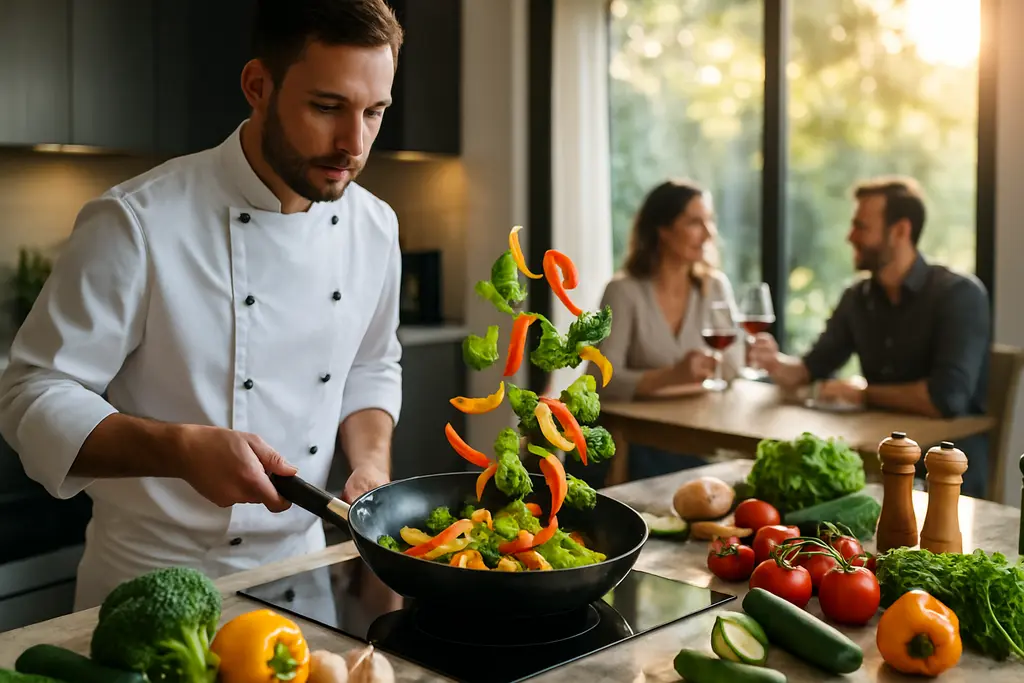
The rise of private chefs has changed how many diners think about a special meal. Instead of saving every celebration for a restaurant dining room, hosts can now consider chef-led service at the kitchen island, around a farmhouse table, or in a backyard set for a long dinner. For Hudson Valley diners, that shift fits a region where home entertaining, seasonal produce, weekend guests, and small gatherings already shape the way people eat.
The trend is not only anecdotal. Future Market Report valued the global private chef service market at USD 12.15 billion in 2025 and projected it to reach USD 25.5 billion by 2033, with in-home dining services representing 45.8% of global revenue in that segment, according to its private chef service market report. Fortune Business Insights estimated the personal chef services market at about USD 18 billion in 2025 and forecast growth from USD 19.22 billion in 2026 to USD 32.57 billion by 2034 in its personal chef services market report.
Why Private Chefs Are Moving Home
Restaurant dining still offers energy that is hard to copy: the room, the service rhythm, the sound of a line working at full speed. In-home dining answers a different need. It gives hosts more control over guest count, pacing, seating, and menu focus. That does not automatically make the meal better than a restaurant meal, but it can make the experience feel more personal.
What The Growth Signals For Diners
The market numbers suggest that diners are willing to pay for service that blends cooking, planning, and hosting support. A private dinner at home may include menu planning before the event, on-site cooking, plating, and cleanup, depending on the service agreement. Those details should never be assumed. A host should ask what is included before comparing one quote with another.
For a Hudson Valley household, the appeal can be practical. A dinner for relatives visiting from New York City, a milestone birthday in a restored farmhouse, or a small gathering after a day at a nearby farm market may not need a loud room or a reservation window. It may need a focused menu, a calm service plan, and a chef who understands how to cook for the number of guests in the home.
Luxury Without Losing Local Character
Luxury dining at home does not have to mean formality. The most satisfying version often starts with a clear point of view: a family-style meal, a plated tasting menu, a seafood dinner, or a seasonal supper that gives guests a sense of place. Diners should look for a chef who can explain the menu in plain language and describe how each course fits the occasion.
This is where local food culture matters. The Hudson Valley has diners who care about farmers markets, orchards, bakeries, coffee, cider, and independent restaurants. A host does not need to request an elaborate menu to create a memorable table. A well-planned dinner can be built around fewer dishes if each one has a reason to be there.
Private Chefs And Signature Dishes
A signature dish is more than the plate a chef photographs most often. It shows how the chef thinks about flavor, texture, portion size, timing, and guest comfort. For private chefs, the signature dish also has to work outside a restaurant kitchen. It must hold up in a home setting, with the equipment, counter space, and service flow available that day.
Private Chefs And Menu Identity
Before booking, ask the chef to name the dishes that best represent their cooking. Then ask why. A strong answer should connect the dish to technique, sourcing, season, or a dining style. If the chef’s sample menu reads like a list of unrelated luxury ingredients, ask how the courses will connect across the meal.
Hudson Valley hosts should also ask whether the chef adjusts signature dishes for the home. Some restaurant-style plates lose quality if they sit too long or require equipment the home does not have. Other dishes shine in a private setting because the chef can plate them at a slower pace, talk through the ingredients, or serve them family-style without pressure from a packed dining room.
Reading A Sample Menu Carefully
A sample menu should help you picture the evening. Look for course order, serving style, rough timing, and any notes about kitchen needs. If the chef lists a tasting menu, ask how many courses are cooked on-site and whether any elements arrive prepared. That is not a flaw; prep is part of professional cooking. The key is knowing what will happen in the home.
For readers comparing service styles, our related piece on private chef questions can help frame a practical conversation before money changes hands. A helpful chef should welcome clear questions because they prevent confusion on the event day.
What Hudson Valley Hosts Should Ask

The first conversation should be about the meal, but the second should be about logistics. A beautiful menu can fall apart if the chef does not know the kitchen layout, parking situation, guest count, dietary restrictions, service time, and cleanup expectations. Hosts should give honest details about the home rather than trying to make the space sound more professional than it is.
Service Scope And Staffing
Ask whether the chef works alone or brings support. A small dinner may need only one chef, while a larger meal may require servers or an assistant. Ask who shops, who brings equipment, who serves beverages if that is part of the plan, and who handles dishes after the meal. The answers affect both price and comfort.
It is also fair to ask whether the chef has experience with the style of event you are planning. A quiet anniversary dinner and a multi-table birthday meal require different timing. Private chefs who can describe those differences clearly will give hosts more confidence before booking.
Pricing And Expectations
Not every quote is built the same way. Some chefs price by guest, some by event, and some by menu after discussing the details. Ask whether ingredients, travel, staffing, rentals, gratuity, and cleanup are included. If the chef proposes premium ingredients, ask how those items affect the final number.
Hosts who want to compare broader service models can also review a related site, Personal Chef Mall, which serves as a resource for people exploring chef services and at-home dining options. Use any directory or marketplace as a starting point, then confirm the details directly with the chef or business before booking.
- Ask for a written menu with serving style and course count.
- Confirm what equipment the chef expects to use in the home.
- Clarify arrival time, service time, and cleanup duties.
- Share allergies or dietary needs before the menu is finalized.
- Request a clear payment schedule and cancellation terms.
Private Chefs In Home Dining Culture
The emergence of private chefs points to a wider change in personal luxury dining: diners want restaurant-level attention without always leaving home. In the Hudson Valley, that can suit gatherings built around a view, a family table, a rental house, or a weekend with friends. The strongest experiences are not defined by excess. They are defined by fit.
A chef’s food should match the room, the season, and the people at the table. A smaller menu prepared with care may feel more generous than an overbuilt one that strains the kitchen. For diners, the practical move is to ask direct questions, compare written proposals, and look for a chef whose signature dishes make sense in a home setting. That is how at-home luxury dining becomes less about show and more about a meal people can remember clearly.