
Local Source app And Hudson Valley Dining
The Local Source app has a clear promise for restaurants and producers: make local buying easier to find, discuss, and plan. For Hudson Valley diners, cafe regulars, and brunch planners, the useful part is not hype about technology. It is the practical shift behind the menu. If a restaurant can see local product availability faster, a chef or cafe owner may have a clearer path to asking producers about dairy, eggs, seasonal produce, and other ingredients that shape breakfast plates, pastry cases, and coffee service.
The research available as of October 15, 2026, places this tool outside New York for now. Its pilot was focused on McHenry County, Illinois, with stated plans to expand to Cook County, Chicago, and eventually nationwide. That means Hudson Valley diners should not assume their favorite cafe is using it. Still, the model is worth watching because the same sourcing questions matter here: Who supplied the dairy? Which farm grew the produce? How often does the menu change? Is the restaurant buying directly or through a distributor?
Why Restaurant Sourcing Tech Matters In Cafes
Coffee Menus Depend On More Than Beans
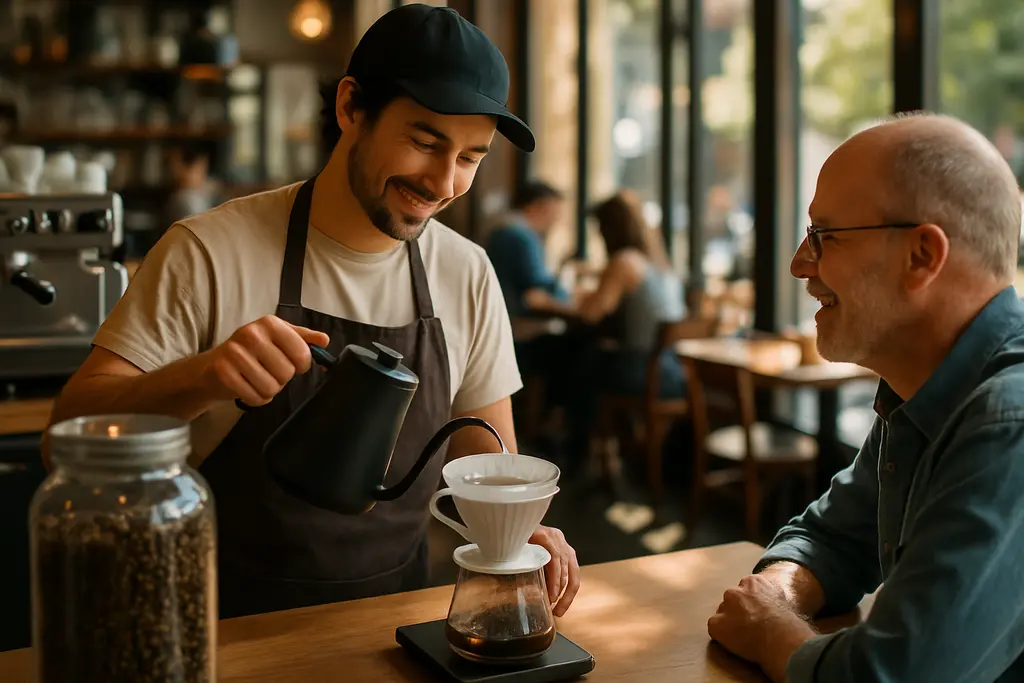
Coffee and drinks coverage often starts with beans, roasters, syrups, and brewing methods. That is only part of the service. A cafe menu may also rely on dairy for espresso drinks, eggs for breakfast sandwiches, and seasonal produce for baked goods or brunch specials. The research notes for Local Source specifically describe local producers such as farms, dairy, and eggs as part of the platform’s intended network. For a diner, that matters because sourcing can affect what is available on a given day, how often specials rotate, and how specific the staff can be about ingredient origins.
In the Hudson Valley, many diners already ask about local farms at restaurants and markets. A technology platform does not replace those relationships, but it can make them easier to organize for the business side of the table. If you are curious about how these questions fit into regional dining habits, our piece on local sourcing dining looks at the diner side of farm-connected menus.
What Diners Can Ask Before Booking
The most useful diner questions are simple. Ask whether the restaurant lists producers on the menu. Ask whether local items are steady menu fixtures or limited specials. Ask whether the kitchen can identify the farm or producer for a featured ingredient. For cafes, ask whether dairy or eggs are locally sourced if those items are central to what you plan to order. These questions are fair, practical, and easier for staff to answer than broad requests about whether everything is local.
- Ask which menu items include local ingredients that day.
- Ask whether producer names are listed on printed or online menus.
- Ask how often local specials change during the week.
- Ask whether brunch and drink menus use the same sourcing standards.
How The Local Source app Works For Buyers
Local Source app Limits To Know
According to Crate Free USA, Local Source is a business-to-business platform that connects restaurants directly with local producers and lets chefs see real-time product availability while communicating directly with producers. The same report says it began with a pilot focused on McHenry County, Illinois, and identified Zak Dolezal, owner of Duke’s Alehouse & Kitchen in Crystal Lake, Illinois, as the founder-owner behind the effort Crate Free USA.
The Local Source app is not described as a payment processor. The research states that it acts as a bridge for search, inventory visibility, and communication, without handling transactions, taking commissions, or processing payments. That distinction matters for restaurants because buying local is not only about discovery. Restaurants still need to arrange delivery, payment, receiving, invoicing, and menu planning. For diners, it means an app can improve visibility without making every operational problem disappear.
How It Compares With Local Line
Local Line is another farm-to-fork platform mentioned in the research. Its restaurant-facing materials describe sourcing tools for restaurants, grocers, food hubs, and producers, including real-time availability and ordering. Local Line also states that Chipotle sourced more than 50 million pounds of local produce through the platform in 2025, and that buyers can discover more than 10,000 local producers through its network Local Line.
That comparison helps diners understand the range of tools in use. Some platforms focus on discovery and communication. Others place more emphasis on ordering systems and larger buyer networks. A cafe owner may want a simple way to find nearby dairy. A multi-location restaurant group may need more structured ordering tools. The diner does not need to know every software feature, but it is useful to recognize that technology can sit behind the chalkboard special, the pastry case, and the brunch menu.
Practical Signals For Hudson Valley Diners

Seasonal Drink Boards
Because the Local Source app pilot described in the research is not documented as operating in the Hudson Valley, diners here should focus on visible signals rather than assumptions. A seasonal drink board can be one signal, but it is not proof of local sourcing by itself. Look for named farms, named dairies, or staff who can explain which ingredients are local. If a menu says “local,” ask what that means for the item you plan to order.
This is especially useful for coffee shops that also serve breakfast. A cappuccino, egg sandwich, yogurt bowl, and pastry may each have a different sourcing story. Some ingredients may come from regional producers, while others may not. A clear answer from staff is more valuable than a broad claim. If staff do not know, that does not automatically mean the restaurant is careless; it may mean the sourcing details are handled by the kitchen, owner, or morning manager.
Chef And Private Dining Questions
Technology that links restaurants and producers also connects with private dining habits. If you are hiring a chef for a brunch, shower, rehearsal meal, or small dinner, ask how the chef sources dairy, eggs, produce, and baked goods. Ask whether local sourcing changes the menu based on availability. For readers comparing at-home dining services, explore personal chef resources for insights that can help frame the conversation before you ask a chef about producers, timing, and menu flexibility.
The same practical approach works in cafes and restaurants. Instead of asking for a perfect farm-to-table promise, ask for one or two specifics. Which producer supplied the eggs? Is the dairy local? Are seasonal specials based on what a supplier had available that week? These questions help diners support restaurants that communicate clearly without putting staff on the spot.
What The Local Source app Means For Diners
A Clearer Conversation At The Table
The Local Source app points to a broader shift: restaurants are looking for better ways to find local producers, see what is available, and keep communication moving. For Hudson Valley diners, the key takeaway is not that every cafe is using a specific platform. The takeaway is that sourcing is becoming easier to discuss in concrete terms. Real-time availability, producer discovery, and direct communication are business tools, but they can lead to better menu answers when restaurants choose to share those details.
If you are booking brunch, ordering coffee, or planning a small event, use this shift to ask sharper questions. Look for producer names. Treat seasonal items as conversation starters. Respect that availability can change. The best dining experience is not always the one with the longest local claim; it is often the one where the restaurant can explain what is local, what is not, and why the menu looks the way it does on that date.